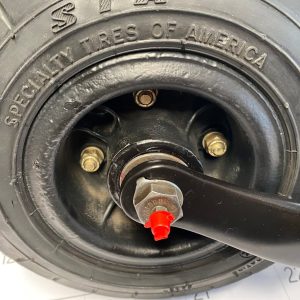
The Scott 3200A Tailwheel – Fully Rebuilt provides aircraft owners, pilots, maintenance facilities, and restoration specialists with a renewed tailwheel solution developed for compatible conventional-gear aircraft. A fully rebuilt description should identify which bearings, bushings, springs, steering components, seals, fasteners, wheel parts, and wear items were replaced or retained.
The Scott 3200A Tailwheel Assembly combines wheel support, directional steering, swiveling capability, and tail-load management within one compact component. A Scott Tailwheel Assembly can develop wear through repeated taxi cycles, landings, vibration, dirt exposure, moisture, poor lubrication, incorrect alignment, or unsuitable adjustment.
An Aircraft Tailwheel Assembly experiences vertical loads, side forces, vibration, steering input, and occasional impact during routine service. A General Aviation Tailwheel may be used on training aircraft, classic taildraggers, bush airplanes, utility platforms, experimental aircraft, and restored vintage designs.
Whether the goal is a Replacement Aircraft Tailwheel or a broader purchase of General Aviation Landing Gear Parts, qualified review provides the strongest foundation.
Understanding the Scott 3200A Tailwheel
A fully rebuilt Scott 3200A may offer practical value when its identity, condition, rebuild scope, and aircraft compatibility are confirmed. Maintenance personnel should inspect the complete tailwheel arrangement before concluding that one component is responsible for steering difficulty or shimmy.
Scott 3200A Tailwheel Assembly Features
Suitable internal clearances and secure steering components contribute to consistent performance. The exact work completed should be listed clearly because rebuilt assemblies may differ in scope and component replacement.
Evaluating a Rebuilt Scott Tailwheel Assembly
A thorough rebuild generally begins with complete disassembly, careful cleaning, detailed inspection, and measurement of wear-sensitive areas. A written work summary helps here explain how the seller defines the assembly’s condition.
Aircraft Tailwheel Assembly Operation
The assembly should move freely enough for intended operation while avoiding uncontrolled swivel or excessive looseness. The tail spring and steering linkage strongly affect how the assembly responds to pilot input.
Choosing a General Aviation Tailwheel
A General Aviation Tailwheel may operate from paved airports, grass runways, gravel strips, private fields, dirt airstrips, and backcountry locations. Vintage aircraft may require additional compatibility review because previous owners may have changed springs, chains, wheels, or mounting hardware.
Benefits of an Aircraft Tailwheel
The assembly remains part of a complete ground-handling system that also includes rudder control, brakes, main gear, and pilot technique. The tire should be inspected for cuts, flat spots, cracking, uneven wear, deterioration, contamination, and correct condition.
Taildragger Ground Handling
Taildragger pilots coordinate rudder, brakes, power, and tailwheel input to maintain ground stability. Pilots should avoid unnecessary mechanical stress while using operating techniques appropriate to the aircraft and surface.
Benefits of an Aviation Tailwheel System
A complete inspection helps avoid unnecessary replacement and repeated troubleshooting. Correct setup supports consistent Aviation Tailwheel System operation.
Maintaining a Tailwheel Steering Assembly
A Tailwheel Steering Assembly converts rudder-related input into directional movement during taxiing and low-speed ground operations. Steering arms should be inspected for bending, cracking, corrosion, elongated holes, and wear at attachment points.
Aircraft Ground Handling Tailwheel
A correctly adjusted tailwheel may support smoother maneuvering without excessive brake use. Ground personnel should avoid forcing the aircraft beyond suitable steering limits.
Benefits of the Scott 3200 Series Tailwheel
The Scott 3200 Series Tailwheel has become familiar within general aviation through its use on numerous conventional-gear aircraft and restoration projects. Accurate information reduces ordering mistakes and improves buyer confidence.
Benefits of a Heavy-Duty Aircraft Tailwheel
A larger or heavier-looking assembly is not automatically appropriate for every aircraft. Preventive maintenance supports reliable Heavy-Duty Aircraft Tailwheel operation.
Buying Tailwheel Aircraft Parts
Every component should match the intended Scott assembly and aircraft installation. Systematic inspection supports dependable long-term performance.
Aircraft Tailwheel Directional Control
Consistent steering can reduce unnecessary brake use and improve maneuverability in confined locations. Maintenance personnel should inspect steering arms, springs, chains, fork structure, wheel condition, and mounting points after significant events.
Buying a Replacement Aircraft Tailwheel
Aircraft records may reveal previous modifications or approved changes that influence replacement selection. Rebuild documentation should accompany the assembly when available.
Maintaining General Aviation Gear Components
The tailwheel should be considered within the broader condition and alignment of the aircraft landing gear. Known limitations and damage should remain clearly disclosed.
Evaluating a Scott 3200A Tailwheel
The rebuild date and identity of the rebuilder should be provided where available.
- Verify the tailwheel model, mounting dimensions, steering-arm arrangement, wheel size, and package contents through suitable references.
- Review the rebuild summary for disassembly, cleaning, inspection, bearing replacement, bushing work, spring service, lubrication, hardware renewal, adjustment, and testing.
- Inspect and photograph the assembly immediately after delivery before installation, adjustment, disassembly, lubrication changes, or modification.
Commissioning a Rebuilt Scott 3200A
Installation should be completed by appropriately qualified personnel familiar with conventional-gear aircraft and mechanical tailwheel steering systems. The steering linkage should respond properly without restricting rudder movement.
A post-installation inspection can confirm hardware security and reveal early movement marks.
Maintaining the Scott 3200A Tailwheel
Preventive maintenance can identify wear before it develops into shimmy, binding, looseness, poor steering, or component damage. The tailwheel should not be ignored simply because it is positioned behind the pilot’s normal field of view.
Cleaning methods should avoid forcing dirt deeper into bearings, bushings, and internal steering components.
Final Thoughts on the Rebuilt Scott 3200A
The Scott 3200A Tailwheel – Fully Rebuilt may suit aircraft owners, bush operators, restoration facilities, flight schools, maintenance organizations, and pilots seeking renewed ground-handling performance. The assembly should be judged according to total installation suitability rather than fresh paint, brand recognition, appearance, or price alone.
Whether operators are sourcing an Aircraft Steering Tailwheel, Replacement Aircraft Tailwheel, or General Aviation Landing Gear Parts, complete condition information supports informed decisions. With responsible operation, protected shipping, timely maintenance, and organized documentation, the rebuilt tailwheel can remain a valuable aviation component.